Wednesday, March 14, 2007

Daylight Saving Time (DST) - The biggest lie passed by (the recent) congress

Every once in a while a law is passed that really upsets me. Usually these are laws that try and fix imaginary problems or laws that have the direct opposite effect than they were anticipated to have. Some examples in recent history would be anti-logging legislation that killed the one industry that kept forests from becoming engulfed in flames annually(of course some environmentalist seem to enjoy the smoke), the Digital Millennium Copyright Act (DMCA) that turned the recording industry mafia (RIAA) into its own police force, and then the recent Energy Bill that had a small section changing Daylight Saving Time (DST) to begin about a month earlier and end about a week or so later than previous years.

The purpose of that last bill was to save energy. Whatever arguments people have for it, the only one mentioned in the law was to save energy. That's it!

Without me getting too far off topic, read the history of DST from the California Energy Dept. In that piece there is a paragraph that states why DST saves energy. It states

"...the biggest reasons we change our clocks to Daylight Saving Time (DST) is that it saves energy. Energy use and the demand for electricity for lighting our homes is directly connected to when we go to bed and when we get up. Bedtime for most of us is late evening through the year. When we go to bed, we turn off the lights and TV.

In the average home, 25 percent of all the electricity we use is for lighting and small appliances, such as TVs, VCRs and stereos. A good percentage of energy consumed by lighting and appliances occurs in the evening when families are home. By moving the clock ahead one hour, we can cut the amount of electricity we consume each day."

Do you believe it?

How can you say that shifting time (not really a saving) will save energy when people watch TV, listen to stereos, watch movies, and run their appliances regardless of the position of the sun at the current time. And how is it that by shifting the time these appliances will no longer be used... or magically stop using as much power. They state that people will spend more time outside during the summer evenings because there is more sun time.... well, guess what, it's summer and people spend more time outside anyway, regardless of what the clock says.

Ben Franklin thought it was a good idea back when businesses used oil lamps to light their establishments when there was not enough sunlight to light everything. But now, lights are on ALL THE TIME in every place of business that I've been in. From McDonalds to High Schools, lights are on regardless of the sun. It's just normal to show up in the morning when it is dark, turn the lights on, and then turn them off when you go home.

Well, there was a study reported here that states that DST does not save energy at all.

The study compared electric demand in the state of Victoria, which extended DST, with its next-door neighbor, South Australia, which did not. "Our results show that the extension failed to conserve electricity. If it's dark enough in the morning that pretty much everyone has to turn on the lights. What that means is that that increase in morning electricity consumption is going to be so big that it offsets any benefits we get from the extra light in the evening. In fact shifting Australians' clocks led to a tiny increase in power use."

Well, I don't believe every study, even ones that I agree with. However, it is interesting that we are establishing a policy based on a DOE study that was done 30 years ago compared to recent studies that show it doesn't change anything.

What do I think would save more energy???? I'm glad you asked! How about educating people to not only turn off the television, stereo, DVD player, Satellite/Cable receiver, and computer... but also use a power strip and "unplug" them from the wall. On average, these appliances use 10% of their power rating just sitting there. That would save a lot. How about installing energy efficient light bulbs. I really feel like these things would save so much more energy than turning your clock forward, but they aren't fun to argue about in Congress. And it seems congress wants to do things to appear to save energy instead of telling people to take matters into their own hands and freak'n save energy themselves! No matter what conservation law passes through the halls of Capitol Hill, the only people that can save energy is you and I... but it makes us feel better when we can see daylight at 10:00pm instead of 5am.

Wednesday, March 07, 2007

Satellite Imagery - The propagated myths

Recently I was asked to speak at BYU-I about remote sensing in agriculture and some of the new technologies that are available for farmers and ranchers. It was a good opportunity for me to do some research and see what has happened in satellite imagery and other technologies over the past couple of years. I learned a lot, and hopefully there is something here that you may not have known either.

Most of us have seen satellite imagery and been amazed at the amount of detail that can be gathered from a photo taken hundreds of kilometers above the earth. In fact, if you are like me, you have probably thought to yourself... "wow, that is pretty neat. But I bet it is nothing compared to the stuff the CIA/NSA or Russia military can get." I would even bet that you have some idea in your mind how advanced 'their' stuff is compared to the average stuff that you and I can see on Google Earth.


Well, I think there is some technology in the modern surveillance satellite that might just blow your mind. But a lot of the people that I talk with have a false sense as to what a satellite is capable of doing. This misconception can probably be placed right at the feet of Hollywood writers and production teams.

Take a look at this movie file if you want to get an idea of what Hollywood would have us all believe the NSA is doing to us today.

A quick objective look at that movie clip shows some common misconceptions about satellite technology and what is possible with surveillance. The first misconception I want to get rid of is the obvious: Full motion/real-time video feed from an orbiting satellite. This is simply not possible now... and may never be realized to the level that we see in that movie. There are some serious limitation brought upon us by the laws of physics.
  1. Imaging satellites are (for a very good reason) in sun synchronous orbits. They are moving across the sky very quickly and they could only view an area briefly during a single orbit.
  2. The bandwidth required to take high-resolution full motion (~15-30 fps) images is prohibitive.
  3. The processing/data storage/and sheer mass of force required to pull that off is not really realistic now. It may be in the future, but it is not now. To get an idea of how modern (this includes most military) satellites work, watch this quick movie clip (sorry that it is a .wmv).

The second problem I saw on the movie was the clouds. Anyone who has worked with imagery knows that visible (and infrared) light does not travel through clouds, smoke, haze, fog, or any other type of obstruction.

The last problem with that great movie clip was the satellite they were controlling. My thoughts tell me that the special effects crew looked at this satellite and tried to copy it. But that satellite uses Synthetic Aperture Radar (SAR). And it is a really cool technology, but that is not the purpose of this post. You can read about it here, and here (small spoiler to make you want to read about it... you can take "pictures" of things in the dark with SAR and even see through smoke and clouds). But that satellite is anything BUT an imaging satellite that will give you pretty color photos.

Because of movies like that one, it isn't hard to imagine a public that has crazy ideas about the ability of satellites. Here are a couple other satellite myths I want to put an end to:
  1. Satellites can see faces and recognize people. They can even read the newspaper print off your newspaper. Truth is, there is a limit to the resolution of images taken from space. It is limited by the wavelength of the light, the height of the satellite, and the size of the objective (diameter) of the telescope. The shortest wavelength of light that penetrates the atmosphere is blue/ultraviolet. The lowest that a satellite usually operates is around 200 km. And the largest telescope is probably around 250cm. The formula for the best resolution of a telescope is the " Rayleigh resolution limit here
    (arc sec) = 140 / Aperture Diameter (mm). You put all that information into the equation and you get roughly 5cm resolution. It can only resolve things that are 5cm in size... there is no way a face could be resolved with that resolution. Don't even think it will ever come close to reading the typeface off your newspaper. No wonder Osama is still running around, they can't see him.
  2. Satellites can read your license plate on your car and track you. OK, this is sort of a continuation of the last one, but this one really gets me. In order for a satellite to "read" a license plate, it would have to be looking perpendicular to it (just like we look at them). This would require the satellite to look either way in front of it, way behind it, or way to the side of it, and through all sorts of atmosphere to get a good look at a license plate. Not realistic at all.

Now a look at what a satellite can really do. It can really take nice photos with a large field of view. It can look at areas that aerial operations can not get into. These 2 capabilities make them invaluable for wartime operations because those commanding operations must know what the whole field looks like, not just little pieces available through aerial imagery. It also makes them ideal for dangerous reconnaissance where an airplane will be shot down (like Russia did to the U-2 during the cold war). Look at some specifications of these satellites below.

Here is a list of some non-spy satellites and their known resolution:

  1. Landsat (Thematic Mapper) 60 m
  2. Landsat (Multispectral Scanner) 120 m
  3. SPOT 1-2 m
  4. NOAA IR System 900 m
  5. NASA/AVHRR1 1-14 km
  6. NASA ER2/AVIRIS Airborne System 11 m

Here are the known resolutions on some spy satellites:

  1. Air force and CIA Discoverer 13 Series Spy Satellites 12 Inch (30 cm)
  2. KH-11 -1984-88 (CCD imager) 4 inch (10 cm)
  3. KH-7 -1966 (film based) 2 inch (5 cm)
Here is a list of satellites and their orbit heights (approximately) and the time it takes to orbit:

  1. Space Station : 217-226 miles (350-364 km) -- 91mins

  2. Imaging Satellites : 350-600 miles (600-1000 km) – 96-110mins

  3. GPS : 12,550 miles (20,200 km) – 11hrs 58mins

  4. Geosynchronous (GEO) (weather/communication/radio surveillance): 22,240 miles (35,786 km) -- 23hrs 56mins

A list of US spy satellites and their capabilities can be found here. So next time you see a movie that shows amazing satellite footage, just remember that you are just watching a movie. You may be able to sleep better at nights.


This is a photo of Landsat...

Sunday, February 11, 2007

"New" Cameras

So my grandfather died on October 9th, and ever since then the family has been trying to get the estate settled and sell the house. My grandparents had lived in that house for over 50 years, and they accumulated a lot of "stuff" ovet those 50 years. A couple weeks ago Nikkala and I helped clean out the house... well, a few of us were trying to clean, and the rest were just picking up stuff they wanted and leaving. It was really interesting to see who got busy and worked and who sat upstairs and had story time with the little trinkets and doilies. Anyway, that isn't the purpose of this post.

So I was cleaning and found this box of old camera stuff. I asked who was getting the cameras (so I could get it out of the house) and they said no one had asked for it yet, so I walked it out to my car and went back to work. When I got home, I pulled the cameras out and found 8 cameras and 1 movie camera. Well, there were two poloroid cameras and I didn't think they would be of much use since I don't have any film for them. But I'm excited about a few of them.

The first camera that I'm excited about is the F. Deckel Munchen - Compur bellow (accordian) style camera.


This camera is fun to play with and even comes with film. I don't know if you can read it in the photo, but it says something about develping before July 1961. Yeah, I hope it is still good. Anyway, I looked on ebay to see if it was worth anything, and it's not really worth a lot other than a good old camera to use for the fun of it. It has 6 film holders, and I think they are all good, so if anyone wants to use it for some photo class and can find 2-1/4 X 3-1/4 film, come and borrow it.

The other camera I'm excited about is the Viscount rangefinder camera. It is the only one that takes 35mm film, and it is in good shape. It is completely manual and has a good lens. It is fun because you can hear the shutter wind down when you press the release.


The Viscount is the one on the right. The other two are a Kodak Brownie and an Ansco Cadet -- both take 127 film and would be fun to use if I was into photo art and had access to 127 film.

The last 2 cameras are Kodak Instamatics, and they came with boxes of flash cubes...that's right, FLASH CUBES!!! (I'm excited for these) And the one on the right still has film in it (partially used).. so I've been trying to finish using it up and take it over to Rite-Aid and see if they will develope it. I may need to take it to a real photo place... but we'll see. Hopefully some of the photos that were taken before will be good (probably not.. but who knows... my parents develpoed some film a couple years ago that was like 20 years old, and only the colors were messed up).


There was also an old movie camera. I don't know anything about it, but I think there is still film in it, so I want to run it out and get it developed as well. But where do you take old 8mm film in to get developed? Any suggestions?


It's a Keystone.. and it is the K8 model. I can't find any other info on it, but I think it looks cool.

Well, it wasn't much, but I'm excited. I guess it is worth the trouble of cleaning out the house. And It is something that I can remember my Grandpa by, because he really did like taking photos and developing the film himself... luckily, the old photo chemicals were already taken away so I didn't have to find a home for them.

Praise Jesus!

Monday, January 29, 2007

Suprise at Maverick

So I was in Maverick filling up my large 44oz cup with some root beer (no more Diet Coke unless it is caffeine free) and Shane Clayson, a great person I share an office with, looked down at the paper stand and saw this on the front page:


It was a double take because neither he nor I knew we were going to be in any paper. Is there something that says you have to give a paper permission to post your face all over Aberdeen? Anyway, with a circulation of 450, I'm starting to worry that this could get out of hand.

Monday, January 15, 2007

Take this - chrishartwell.com

OK,
Nikkala made the best cinnamon rolls tonight... but she did it with the understanding that we would take them to the neighbors after FHE. Well, I didn't really want to take them to the neighbors, but I decided that if that meant I could have a cinnamon roll, it would be ok.

Well, after FHE we started out by taking some to the Davis family. They let us in and we talked for a few minutes, then they informed us that we had to leave because they were going to miss "24" and since they had no TiVo, we had to go. So off to the Turners we went.

We arrived at the Turners and fortunately they weren't tied to any particular television series, so they let us in. Aaron had to get stitches on his finger Sunday because VaNae sent him home during church to put the roast in the oven and he sliced his finger open (let that be a lesson to you all). So we told them that we brought cinnamon rolls over because of the finger (although it was beacuse I had to think of someone to take rolls to). Anyway, while we visited, Aaron took me back to the office and started to show me job openings at the INL. They all pay better than the Univ. of Idaho... tempting...

Anyway, to make a point to this post, while we were talking, we heard a scream coming from the other two parents who were watching Bentley and Violet (his girlfriend). Both Bentley and Violet had crawled over to the cat food bowl and were filling their faces with cat food as fast as they could.


Ok, so I thought cat food was made up of unmentionable animal pieces and undesirable meat that they wouldn't put in dog food. But it turns out that most cat foods are grain based and have animal ingredients added for nutrition. But for the most part it is either corn, rice, or soy. So I guess I'm not such a bad parent after all... I just didn't know at the time that he was just getting some needed nutrition (like taurine). So next time your kid eats cat or dog food, just let them. It is probably better for them than the stuff they eat off your floor!

Saturday, December 09, 2006

Pineapples

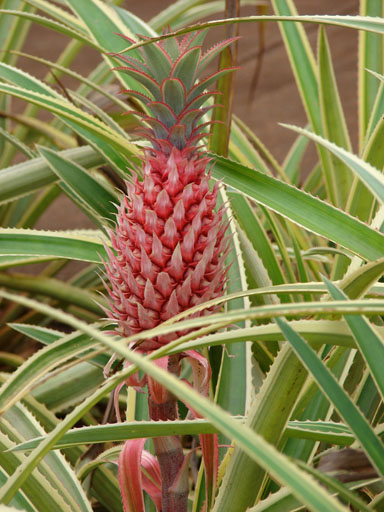
On our recent trip to Hawaii, Nikkala and I stopped by the Dole Plantation. It was a lot of fun and we learned quite a bit about pineapples and how they are grown. Have you ever wondered how they were grown? Did you think they grew on a vine, on a tree, underground...? Well, I'm going to share some things I learned about pineapples.

1- Pineapples are a member of the Bromeliaceae family. This is the same family as Spanish Moss and some other tropical plants. It is native to Jamaica and has been grown in the New World for centuries.

2-Christopher Columbus is thought to have brought it back to Spain and it quickly spread throughout Europe. Spain is thought to have taken it to the Philippines, Guam, and Hawaii. Pineapple was not grown much commercially in the early years because it does not keep very long and it couldn't be grown in places outside the tropics and greenhouses.

3- James Dole came up with the idea to can pineapple and began marketing it around 1900. It was a huge success and his 60 acre farm grew to cover more than 250,000 acres across several islands.

4- It takes 18 months after planting to produce the first pineapple. They take 3 crops off each plant over a 5 year span.

5- Pollinated pineapple blossoms are not desirable, so hummingbirds (the primary pollinator of pineapple) are not allowed on the islands of Hawaii.

6- Pineapples are planted and grown vegetatively (just like potatoes). They whack off the tops of the fruit and place it in the ground where it grows roots and the leaves off the top of the pineapple become the new plant. Here is a man planting pineapples.


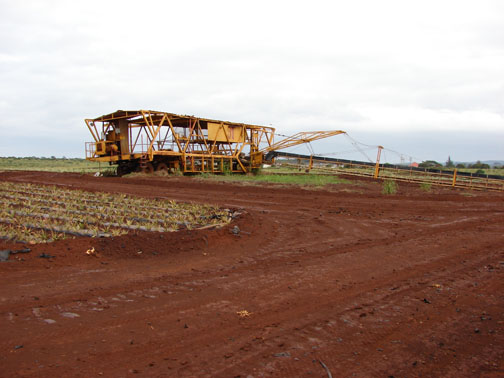
7- Pineapples are grown in beds and irrigated using drip irrigation. The ground is covered with black plastic as a mulch to keep weeds out and disease out. Since it is a monoculture, they have big problems with disease and weeds, therefore, the photos show a lot of plastic on the ground as a byproduct of the mulching practice. Notice on the first photo there is a star showing the drip tape coming out of the main feeder hose. Just an FYI, I've been doing research on using drip irrigation in potato beds, that's why I find it interesting.


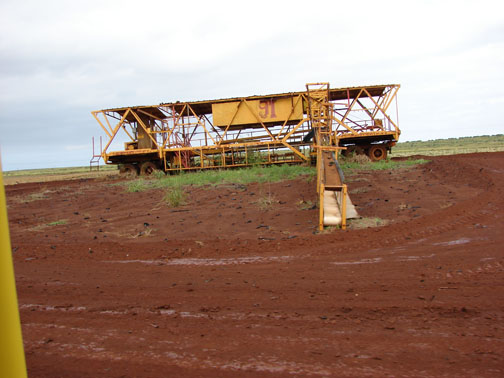
8- Pineapples are harvested by hand with this large machine. People walk behind the long boom that sticks out and place the pineapples they pick onto the boom where they are taken to the main covered area and boxed up for shipment.


9- Pineapple grow out of the main plant attached at the base. They will NOT ripen after picked, therefore it does no good buying a green pineapple from the store and letting it sit for a few days before eating. They are picked ripe and the sooner you eat it, the better it will taste. Fresh pineapple in Hawaii is allowed to ripen a bit more since it will be consumed sooner, that is why pineapple brought back from the island always tasted the best.


10- Pineapple on a hamburger is really good. So is the fantastic pineapple split... yummy Dole Whip on top of chunked pineapple with coconut topping and caramel...all encased in a half of pineapple...YUMMY!!! Anyone going to Hawaii should eat them both!

Tuesday, November 28, 2006

Potato People

OK,
So I don't post quite as often as my wife. In fact, I've posted so infrequently that Chris has placed me on his junk links. That's ok... I'll forgive him (but maybe not for hurting my fantasy record...).

But to the point of this post. I recently finished harvesting and grading the potatoes I've spent all year growing. Some of the trials looked pretty good. Others didn't. One study in a particular field in Minidoka county looked really bad. You see, when you grow potatoes, you want them to look like the ones you buy in the store. Moderate size, no disease, no green, and most importantly, a uniform shape and conformity.

Well, while we were grading this particular field, many of the plots had absolutely no potatoes that could be classified as US#1 (the prime classification for a potato). That is very odd. But what that meant for my crew is we could guess what the potato was trying to look like. You see, Michael Jackson is not the only thing that wants to look like something unnatural. Check out this potato:


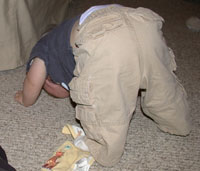
I thought it looked like some strange Klingon vessel or something. It would certainly pass a an extra large ginger root before it would pass as a potato. Anyway, my favorite from this year is a potato that looks like Bentley with his pants down (or Rabbit ears if you prefer to look at it upside down).


What do you think? Should Bentley and the potato go on the road as identical twins sepaerated at birth?

Wednesday, November 08, 2006

Wednesday, August 02, 2006

NASA and the pork problem

NASA and the pork problem

DISCLAIMER: OK, I realize that this isn't a life changing event. I even realize that it isn't newsworthy to some, but I thought I would comment on it since it is related to some of the research I was involved with while attending Utah State.

A recent piece from Florida Today that was run in USA Today the other day talks about the pork projects that are eating up NASA's budget and causing them to cut funding to some of their most critical programs. For those who may not be aware, any congressionally mandated project (or "pet" project) is considered "pork". Now the NASA administrators hates pork, especially when it deals with them. You see, no one likes to be told what to do with their money, especially NASA Administrator Mike Griffin. He recently told congress that he is "deeply concerned that the growth of these unrequested congressional directions is eroding NASA's ability to carry out its mission of space exploration and peer-reviewed scientific discovery."

That sounds good, but what are some of the "pork" projects and what are some of the missions NASA wants to carry out?

Here is a list of a few projects that were mandated by Congress (pork) this year:
•• Shuttle rescue mission to Hubble Space Telescope
•• Recently launched probe bound for Pluto
•• Construction or renovation of dozens of museums, planetariums and science labs for colleges.
•• Computers, classrooms and lab space for colleges and schools across the U.S.
•• A website and laboratory for the Gulf of Maine Aquarium.
• OnTarget-Geospatial Extension Program (program designed to educate Natural Resource and Agriculture managers, including county extension agents, to use NASA technologies such as GPS and remote sensing in their work)

What are some of the projects the NASA administrators want to fund but may need to be cut because of the "pork"?

•• They may cut half of the funding for the agency program that helps ensure historically minority colleges and universities are represented in NASA projects.
•• International Space Station experiments (such as studying ants in microgravity environments) may be cut.
•• Space Shuttle missions
•• Development of a CEV to go to the moon.

Now don't get me wrong, I love space and I would love to send someone to Mars or back to the moon... but what benefit does that give us here (other than a Mars base where we can run when the crap hits the fan -- e.g. Al Gore's doomsday scenario of the global ice caps melting and killing us all). On the other hand, I love seeing the photos that come back from the Hubble. I also enjoy learning about space from planetariums and I think that education is on of NASA's greatest jobs. But Mike has different plans for the money and he is upset. He has even threatened to cut funding to robotic space missions (such as the Mars Rover mission) because he is being forced to fund other projects.

Seriously, it sounds like everyone has pet projects, including NASA, and they are just miffed that they have to do what congress wants. Anyway, that is what happens when you are an agency that relies completely on discretionary funds. Sorry, but that is life. And I think a lot of the pork projects are really good for the country.

I have to admit, that not all of the projects are things that I would personally want funded, but neither was the wolf recovery in Idaho or the millions we dump into salmon and steelhead recovery when the data shows it will never help until the dams are gone (and I think the dams are more vital than the fish...) ... but I digress.

So next time someone tells you that congress is wasting billions on pet pork projects, ask yourself what agenda that person is pushing and if that pork is something that is helping your community.

Thursday, March 16, 2006


I recently accepted a job with the Univ. of Idaho. I am assigned to the experiment station in Aberdeen and will be working there as well as some plots in the Blackfoot areas under Bryan Hopkins. Bryan is the potato cropping expert and we have worked together before with OnTarget and some other projects while I was with Utah State and NASA. Nikkala is happy to be moving back to Idaho and I'm happy to be moving to a place with good fishing and hunting (sorry, Utah was never as good as the South Fork for fishing). We will miss Logan and all of our friends there, but it is good to experience new things.

Thursday, February 23, 2006


A lot has happened since the last post! To start with, I'd like to announce the arrival of the newest member in our family, Bentley Helaman Stephens. Take a look at him over at troywilkins.com. He sure is a cool little guy.

In other news, I defended my thesis back in November and I am finishing up all the last little revisions now. I'll post a link to the thesis as soon as it's done. I know everyone is real excited to read it. I wish Micro$oft Word wasn't such a pain in the neck to use, it tries to fix everything automatically and it is usually wrong when it tries. If I were to do it again, I'd try AbiWord. I like that little program.

Thursday, August 11, 2005

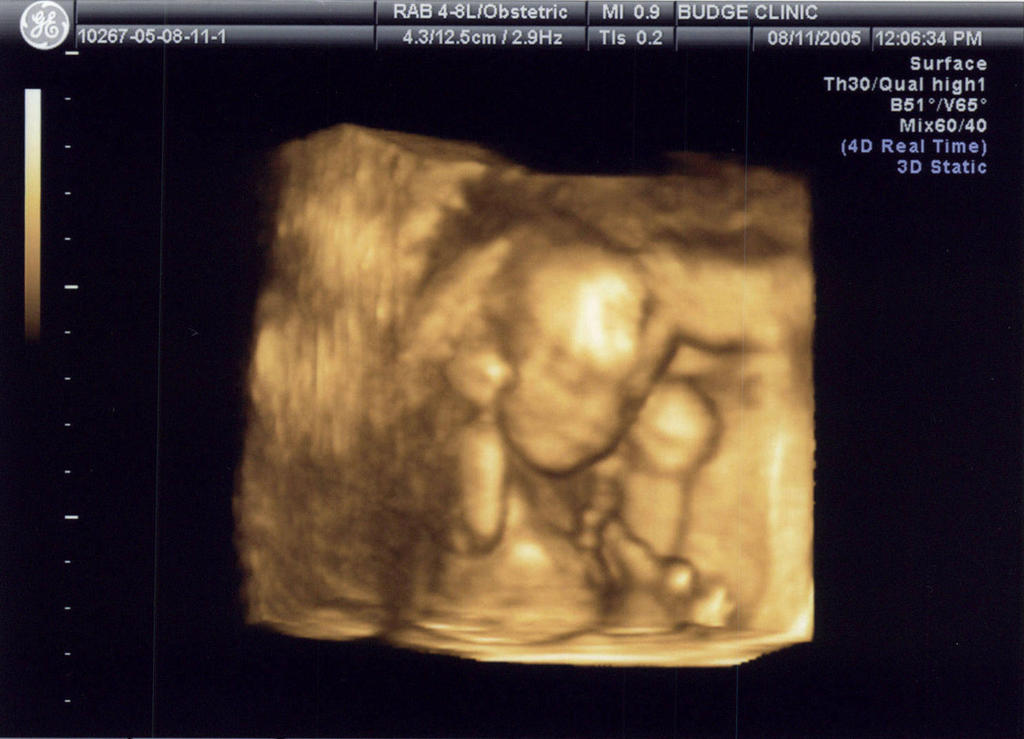
It's a BOY!!!!!!!!!!!!!

Tuesday, August 09, 2005


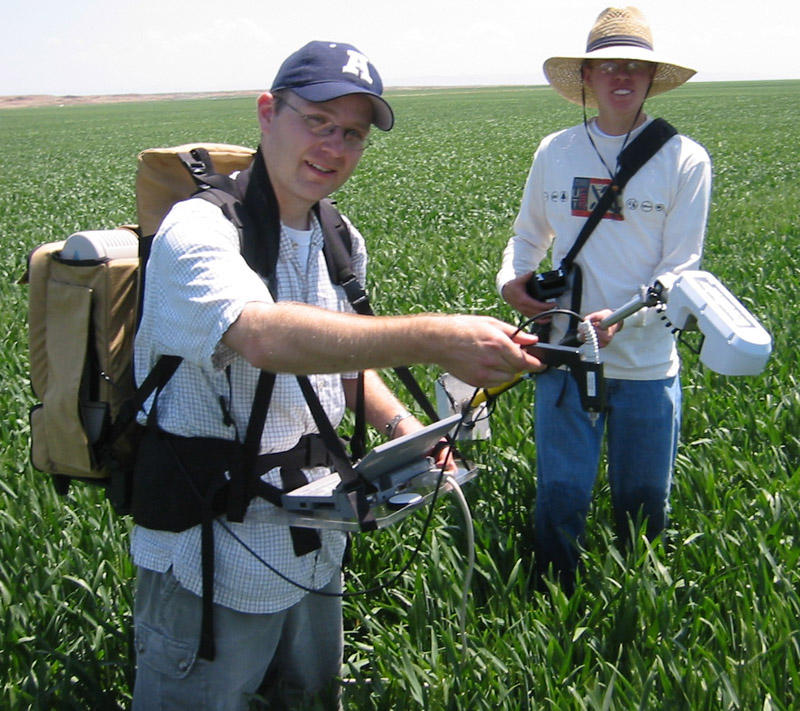
So I've been asked by a few people to show them what I've been working on while at school. Here is a photo of Erik and myself taking radiometric data of a field in Minidoka Idaho. I think I'll also put a link to the lab/office homepage with some links to the files and projects I've been involved with.

http://ags116mac.agsci.usu.edu/

My thesis is going to be on quantifying carbon using incident spectral reflectance within the SWIR bands. I'm not sure when it will be finished, but I'm working on it. In fact, I should probably stop typing and work on it right now.

Thursday, August 04, 2005

I'm still working on my thesis. I can't believe how long it is taking to write. I'd probably be done by now if it wasn't for slashdot!!! I'm still reading journal articles trying to get as much background covered as I can. In the process of looking up every article ever written about soil carbon and reflectance, I've found several articles from the Soviet Soil Science journal. They were studying carbon and reflectance clear back in the 60's. I can't believe how much research has been repeated because governments dislike studies that aren't 'home-grown'.

In other news, we (Nikkala and I) are expecting our first baby in January. I'm really excited. Of course I think it will be a boy, but we don't know for sure yet. I guess I have a 50-50 chance of being right. I need to hurry and finish this thesis and get a real job before then. We need to move into a larger house as well. The second bedroom is filled with all of my books, computers, and other stuff. Nikkala doesn't think I need my G4 cube, Silicon Graphics Indigo, and Dual G5 desktop all running together and wants to convert the room into a baby room. So I think a new place will save a lot of arguing.

Thursday, June 03, 2004

Yeah, it's official. I'm getting married on July 1st. It is a pretty big step. How do you decide that you can spend your whole life with just one person. Well, I did.. and I'm glad that it is to Nikkala. She is the coolest girl...


I'm still working on the soil carbon remote sensing project and I'm also starting some work using a Veris soil EC mapping rig. It's pretty cool... have a look at:


http://www.veristech.com/


Well, I've got wedding plans to plan. Peace Out.

Wednesday, April 28, 2004

Finals are over... no grades posted yet... they are-a-coming soon...

The recent bout with finals brings me to a question.. why do professors feel like their finals all have to be 3-4 hours worth of questions crammed into 2 hours. Does it make them feel good when only one or two people actually turn in the final before the time is expired? That doesn't tell the teacher what the student knows, it just tells them that no one was fast enough to finish it.

email me at _chod@yahoo.com_ -erase the _ :)

Sunday, April 25, 2004

Hello,
Welcome to my BLOG. I hope to find time to fill it with things worthy of reading. Currently I'm in graduate school studying soil science, and finals are here... so I will fill it another time.